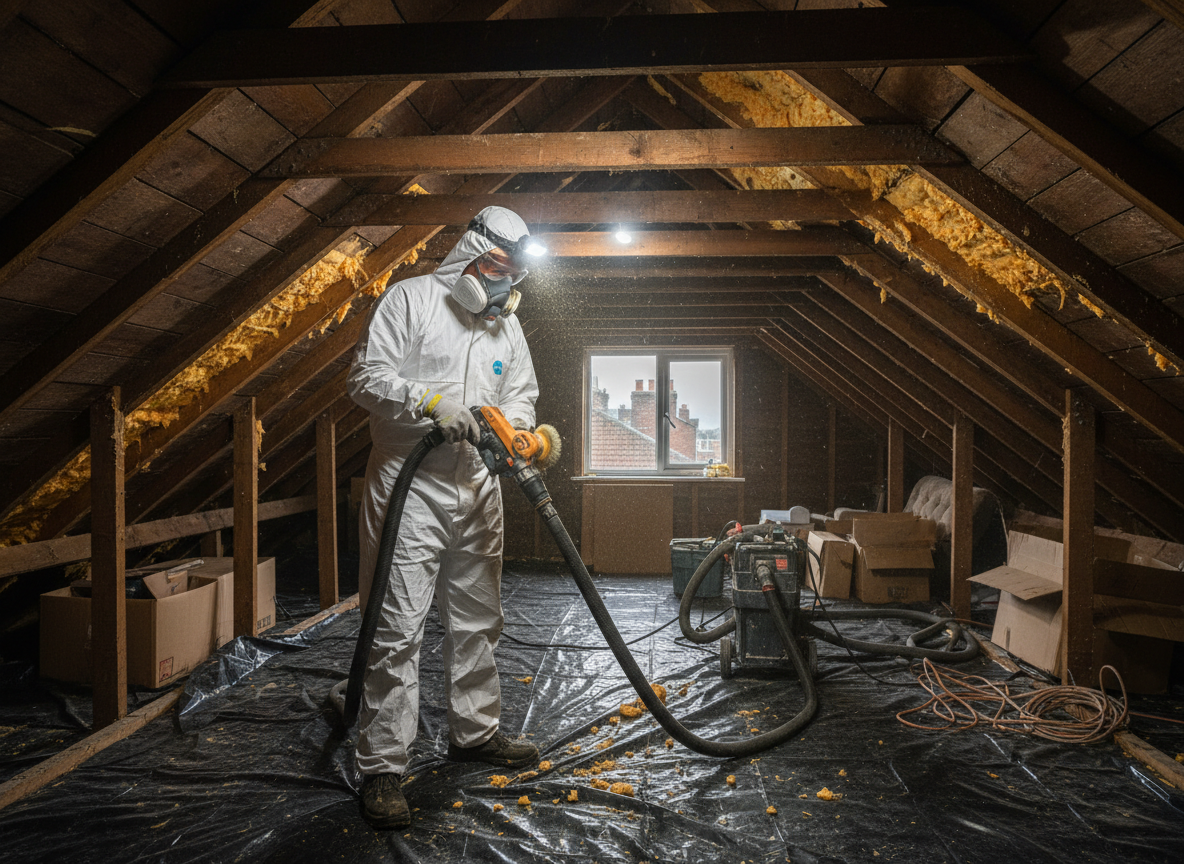
Attic spray foam in Sheffield homes often fails when it traps damp in the limited roof voids common to Victorian terraces and early 20th-century stock around Hillsborough and Walkley. Once the closed-cell material begins to break down, it can hold condensation against timber joists, especially during the frequent wet spells that move in from the Pennines. Removal requires careful sectioning of the foam to avoid disturbing original lath and plaster ceilings below while protecting electrical runs that were added decades after the houses were built.
Access in these properties is rarely straightforward. Narrow loft hatches and low ridge heights mean technicians must work in sections, using negative air machines to contain particles before cutting and peeling the foam from rafters. In properties near the Sheaf or Don valleys, extra attention goes to drainage paths because any residual material left behind can channel water toward party walls during heavy rain. Disposal follows local waste rules for construction materials, with loads taken to licensed sites rather than general landfill.
Homeowners sometimes attempt partial removal themselves, but this leaves seams that continue to hold moisture and can affect roof ventilation paths already restricted by the tight eaves found on many South Yorkshire terraces. Full extraction restores airflow and allows inspection of hidden timber for rot before any new insulation is considered.
Technician insight
In Sheffield, the thing that catches most people out with Attic spray foam removal is how quickly moisture builds behind the foam in the shallow roof voids of Victorian terraces once our regular Pennine rain starts finding its way in. Homeowners often think a quick scrape will sort it, but that leaves strips that keep holding water against the timbers.
Foam Removal in a Walkley Terrace
Problem: musty odour and staining on bedroom ceilings below the loft. We found closed-cell foam that had separated from the rafters and trapped condensation along the party wall. We sectioned and extracted the material, cleared residual dust, and confirmed the joists were still sound before leaving the attic ventilated.
How it works
- 1
Initial Inspection
Assess attic access, foam depth, and any signs of moisture damage in the roof structure.
- 2
Containment Setup
Install negative air filtration and floor protection to keep dust contained during removal.
- 3
Foam Extraction
Cut and remove the spray foam in controlled sections, checking rafters and wiring as work progresses.
- 4
Cleanup and Disposal
Vacuum remaining particles and remove all waste to licensed facilities before final attic clearance.
Pricing
Upfront quotes follow a site visit, with final cost set by attic size, foam thickness, and access constraints typical of Sheffield terraces.