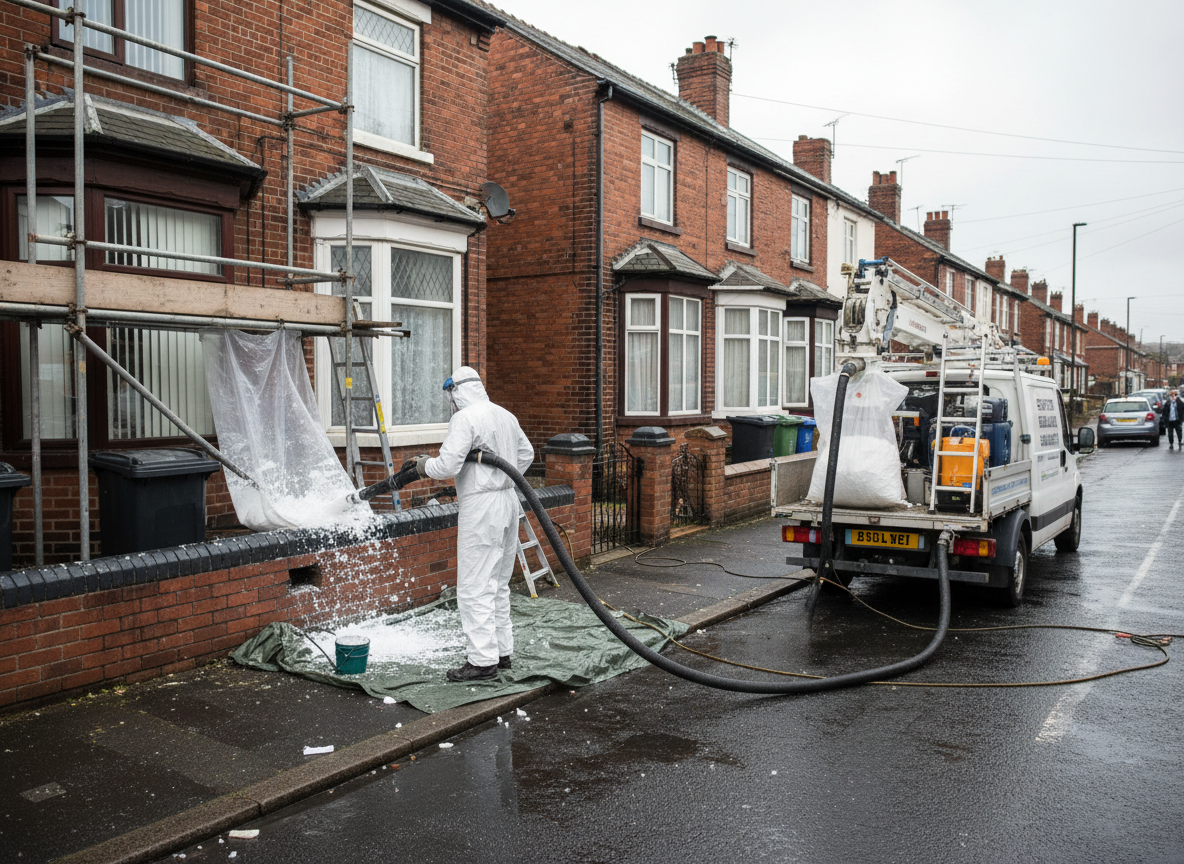
Cavity wall spray foam installed in Sheffield homes from the 1970s onward often traps moisture against brickwork once the original insulation degrades. Properties in neighborhoods such as Hillsborough and Ecclesall Road face persistent damp because South Yorkshire winters bring prolonged rain and freeze-thaw cycles that push water through failed foam seals. Removal requires cutting precise access slots, vacuum extraction of the polyurethane, and inspection of the cavity for residual bridging before any new insulation is considered.
Older Victorian terraces in Nether Edge and post-war semis around S35 postcodes commonly show foam that has absorbed groundwater from the local clay soils. Technicians must work around narrow cavities and shared party walls without disturbing neighboring properties. Full extraction prevents hidden mold growth that later appears as staining on internal plaster once temperatures drop below freezing.
Regulatory checks in Sheffield require confirming that removed foam has not compromised the wall's thermal performance rating under current building standards. PureGuard Services documents every cavity before and after work so homeowners can verify compliance when selling or refinancing. Work is scheduled around the area's frequent wet weather to keep exposed cavities dry during extraction.
Common Triggers for Removal
Sheffield's variable weather and older housing stock make foam failure more likely after ten to fifteen winters. Homeowners notice cold spots, musty odors, or rising damp along skirting boards first. Early removal avoids larger structural repairs later.
Technician insight
In Sheffield, the thing that catches most people out with Cavity wall spray foam removal is how clay-heavy soil around S35 postcodes keeps cavities damp long after rain stops. Homeowners often assume the foam is the only issue, yet the real problem is bridging at the base of walls in terraces like those in Hillsborough where water never fully dries out.
Ecclesall Road Terrace Extraction
A 1930s semi in Ecclesall showed rising damp along the ground floor. Inspection found saturated foam bridging the cavity base. PureGuard Services extracted the foam through side access slots, cleared residual debris, and confirmed the cavity was clear. The homeowner reported no further damp after the next wet season.
How it works
- 1
Site Survey and Cavity Mapping
Technicians inspect external walls at the Sheffield address, locate injection holes, and map cavity depth and foam condition.
- 2
Access Creation and Extraction
Small slots are cut at regular intervals; industrial vacuum equipment removes the foam while containing dust and debris.
- 3
Cavity Cleaning and Inspection
Residual foam and debris are cleared, walls are checked for bridging or water damage, and findings are recorded.
- 4
Reinstatement and Documentation
Access points are sealed to match existing brickwork and a full report is supplied for the homeowner's records.
Pricing
Cost depends on property size, number of cavities, and foam condition. Upfront quotes provided after survey.