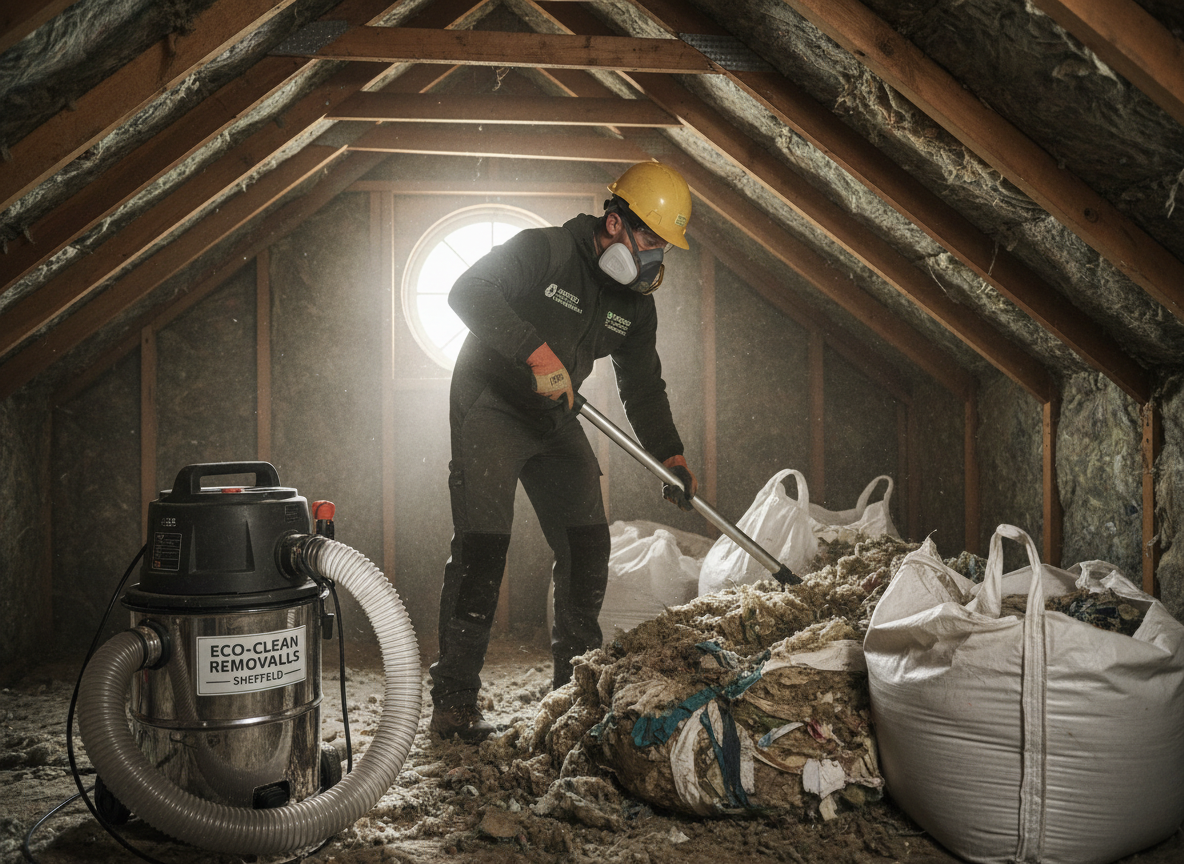
Sheffield's older terraced and stone-built properties, common in areas like Walkley and Nether Edge, often contain spray foam insulation that was applied decades ago to combat the region's damp winters and driving rain. Removing it without releasing fibres or chemicals into the surrounding soil and water table requires containment methods and low-VOC solvents that break down the foam on site. Homeowners frequently discover the material has trapped moisture against timber joists, leading to rot that only becomes visible once the foam is stripped back.
The process must account for the steep terrain and narrow access points typical of South Yorkshire hillside homes, where equipment has to be carried in by hand rather than pumped through external walls. PureGuard Services works to keep dust and debris contained so it does not migrate into neighbouring properties or the local drainage system that feeds into the River Don catchment. Careful sequencing prevents the foam from re-expanding during removal, which can occur when temperatures fluctuate between Sheffield's frequent cold snaps and milder spells.
Edge cases include foam that has been applied over original lath and plaster ceilings in Victorian properties; these ceilings can collapse once the supporting foam is dissolved if not braced first. Regulations around waste disposal in the Sheffield area require the removed material to be treated as controlled waste, so transport and disposal records are kept for every job. PureGuard Services schedules work around the wettest months when possible, because high humidity slows solvent evaporation and extends drying times inside the property.
Technician insight
In Sheffield, the thing that catches most people out with environmentally friendly insulation removal is how the constant damp from the Pennine weather has already started rotting the joists behind the foam; once you dissolve the insulation the extent of the damage shows up fast and you have to decide whether to treat the timber on the same visit or leave the ceiling open for drying.
Walkley Terrace Job
Homeowners in a Walkley stone terrace noticed musty smells after heavy autumn rain. We found spray foam had bridged a damp-proof course and trapped water against the floor joists. After controlled dissolution and extraction the rotted sections were exposed, allowing targeted timber treatment before new insulation was considered. The property dried out without further disruption to the neighbouring house.
How it works
- 1
Initial Assessment
We visit the property in Sheffield to inspect the foam application, check for hidden moisture damage, and confirm access routes through the building.
- 2
Containment Setup
Dust barriers and negative air machines are installed to prevent particles from escaping into living spaces or the surrounding neighbourhood.
- 3
Foam Dissolution
Environmentally formulated solvents are applied in stages to break down the insulation without aggressive mechanical scraping that could damage underlying structures.
- 4
Clearance and Disposal
All material is collected, bagged, and taken for licensed disposal while the property is ventilated and surfaces are cleaned.
Pricing
Cost depends on property size, foam depth, access difficulty, and any additional timber repairs required after removal.