Sheffield's older terraced and semi-detached housing stock, particularly pre-1930s builds in neighborhoods like Walkley and Nether Edge, frequently contains cavity or loft spray foam that traps moisture against stone or brick walls. Pennine weather brings prolonged rainfall and high humidity, accelerating degradation where foam meets unventilated roof spaces or solid walls. Assessment requires checking for hidden damp, mold growth behind foam layers, and compromised timber joists common in these properties.
Edge cases include foam applied over existing mineral wool in post-war council homes around Gleadless or Parson Cross, where poor adhesion leads to sagging and air gaps. UK building regulations on ventilation and insulation upgrades mean assessments must note any breaches that could affect future retrofits. Homeowners often overlook how steep Sheffield terrain and poor drainage around foundations worsen water ingress into lower wall cavities.
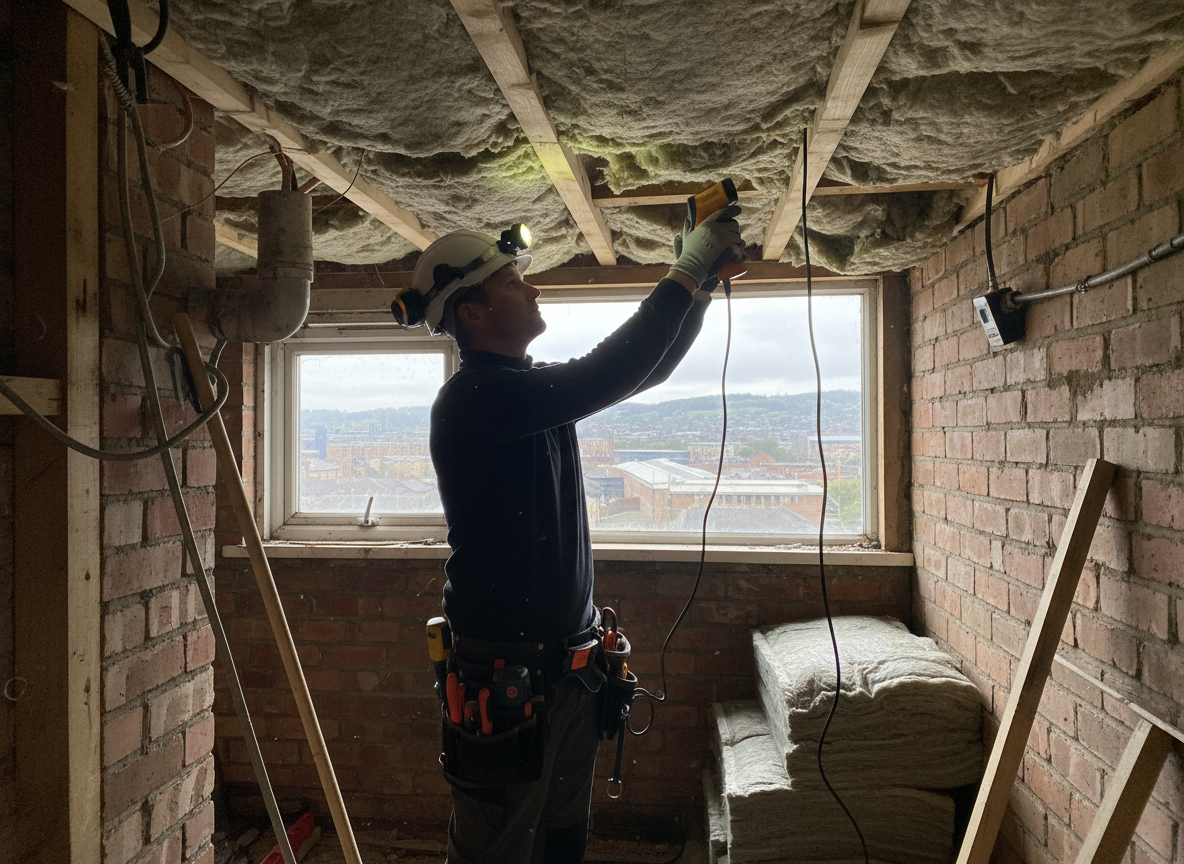
A proper inspection uses borescopes and moisture meters to map affected areas without full removal, identifying whether foam needs extraction or if localized repairs suffice. This prevents unnecessary disruption in tight lofts typical of Sheffield's Victorian terraces while flagging health risks from off-gassing or mold in poorly ventilated spaces.
Technician insight
In Sheffield, the thing that catches most people out with insulation assessment is how often spray foam was pumped into unventilated cavities of 1920s-1950s stone terraces around Hillsborough, where the Pennine rain soaks the outer wall and never dries out behind the foam.
Walkley Terrace Loft Check
Owner noticed persistent damp smells in the top bedrooms of a 1900s terrace. Inspection found spray foam bridging a blocked roof vent and trapping condensation against rafters. We mapped the extent and advised targeted extraction to restore airflow without stripping the entire loft.
How it works
- 1
Initial Property Review
Gather details on the home's age, previous insulation work, and visible symptoms like musty odors or cold spots reported by the owner.
- 2
On-Site Visual Inspection
Examine accessible loft, cavity, and wall areas using non-invasive tools to locate spray foam and note surrounding conditions.
- 3
Moisture and Structural Testing
Measure humidity levels and check for timber decay or masonry damage typical in Sheffield's wet climate.
- 4
Detailed Report and Recommendations
Provide findings with photos, risk assessment, and next steps for removal or remediation if needed.
Pricing
Upfront quotes after inspection, scaled to property size and access difficulty in Sheffield homes.