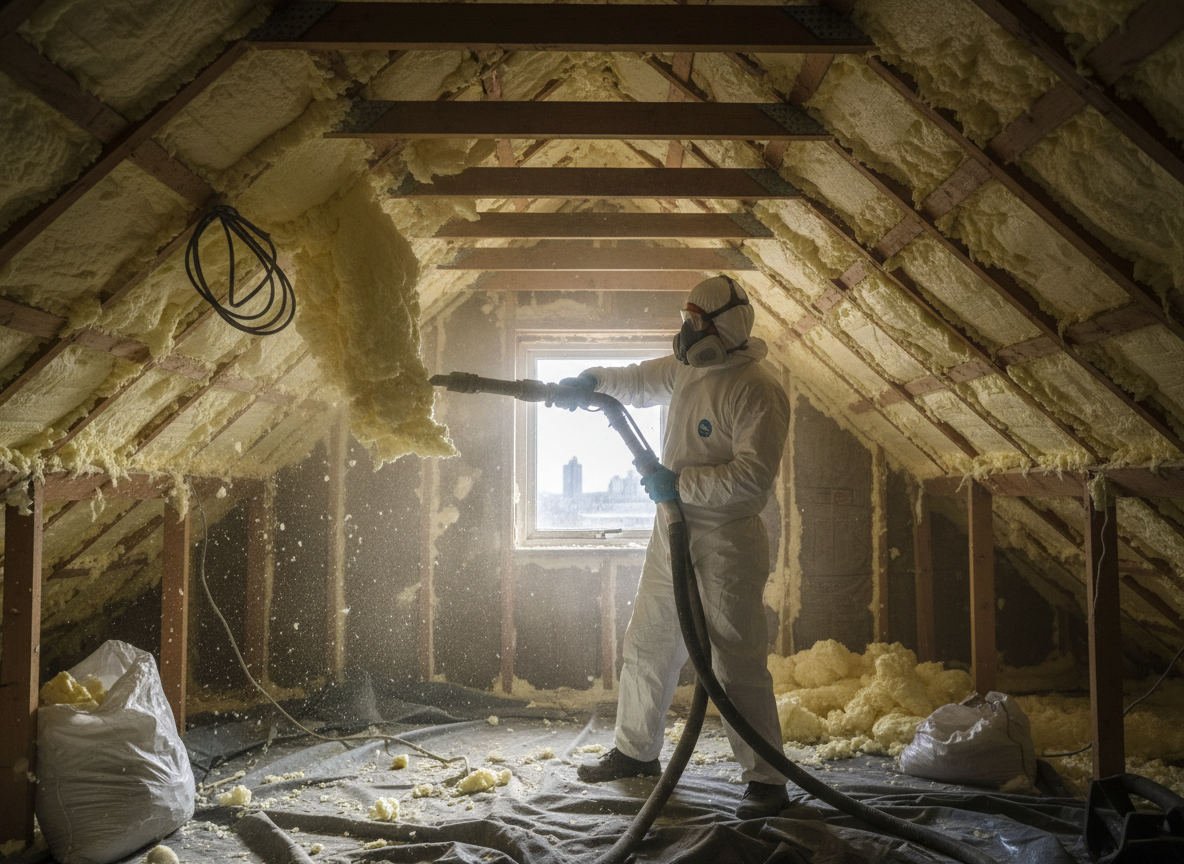
Open cell spray foam installed in Sheffield lofts and cavity walls often traps moisture because the material allows vapour to pass but can hold water against timber joists and brickwork when ventilation is poor. Many Victorian and Edwardian terraces in areas such as Nether Edge and Hillsborough were retrofitted without proper roof vents, leading to rot that only becomes visible once the foam is cut away. Removal requires careful scoring and peeling to avoid damaging original lath and plaster ceilings below while containing dust that can migrate through party walls common in the city's dense terraces.
Winter temperatures in South Yorkshire frequently drop below freezing, making the foam brittle and easier to fracture in sections, yet the same cold stiffens any residual adhesive on rafters and requires longer dwell time for softening agents. Summer humidity, by contrast, softens the foam but increases the risk of mould spores becoming airborne during extraction. Technicians working from the base at 35A Business Park must therefore adjust tooling and containment methods seasonally to protect both the structure and neighbouring properties.
Electrical cables and pipework routed through foam-filled voids in Sheffield properties are frequently embedded deeper than expected, especially in post-war semis around Ecclesfield. Safe removal therefore begins with tracing and isolating circuits before any mechanical cutting, and ends with inspection of every exposed timber to confirm no hidden damp remains that could affect the next insulation layer.
Technician insight
In Sheffield, the thing that catches most people out with open cell spray foam removal is how often the foam was sprayed straight over original lath and plaster in 1930s semis around Walkley without any vapour barrier. Once you start pulling it, the plaster starts crumbling because years of trapped Sheffield damp has already weakened the keys.
Hillsborough Terrace Loft
Homeowner noticed ceiling staining after heavy autumn rain. Inspection found open cell foam had bridged a blocked gutter and held water against rafters for several seasons. We isolated the electrics, removed the saturated foam in sections, dried the timber, and left the loft ready for new breathable insulation.
How it works
- 1
Initial Assessment
Survey the property in Sheffield to map foam depth, locate embedded services, and identify any rot in joists caused by trapped moisture.
- 2
Containment Setup
Seal off rooms and lofts with sheeting to prevent dust migration through shared walls typical in South Yorkshire terraces.
- 3
Foam Extraction
Score and peel open cell foam in controlled sections, softening with approved agents where adhesive bonds are stubborn.
- 4
Surface Cleaning and Inspection
Remove residue from rafters and brickwork, then check for hidden damp or damage before recommending replacement insulation.
Pricing
Cost depends on access difficulty, depth of foam, and whether hidden timber repairs are needed after removal.