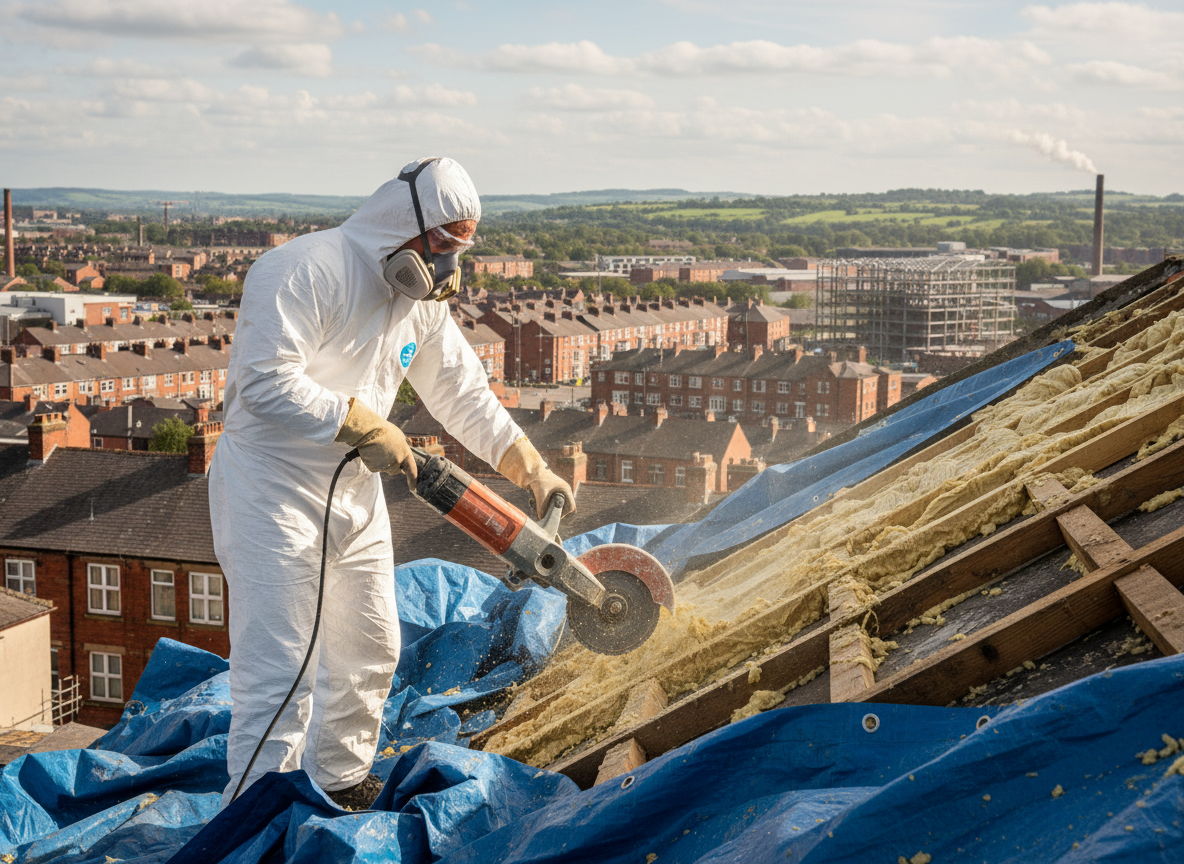
Roof spray foam in Sheffield terraces and semis often bonds tightly to felt, timber joists and slate because of the region's damp winters and limited loft ventilation. Removal starts with careful scoring to avoid tearing underlayment on properties built before the 1960s, when many Sheffield roofs were upgraded with closed-cell foam. Dust and debris must be contained because narrow ginnels between houses prevent easy skip access and neighbours are close.
Edge cases include foam that has wicked into ridge vents or around chimney flashings on the steeper pitches common in the S6 and S10 postcodes. Attempting to peel it in cold weather makes the material brittle and leaves residue that later causes condensation. PureGuard Services works section by section, using low-speed scrapers and HEPA vacuums to keep insulation fibres out of living spaces below.
After the foam is cleared, the roof deck is inspected for rot or nail pop caused by trapped moisture. In Sheffield's frequent freeze-thaw cycles this damage shows up first around valley gutters. Any affected timber is marked for the owner to arrange separate repair before new insulation or boarding is considered.
Common Triggers for Roof Spray Foam Removal
Homeowners in Sheffield often seek removal after discovering trapped damp in lofts or when selling a property and surveyors flag the foam as a ventilation blocker.
Technician insight
In Sheffield the thing that catches most people out with roof spray foam removal is how the city's older stone terraces and steep S6 hillsides limit external access, so almost everything has to come out through the loft hatch while keeping dust out of the rooms below.
Terraced Loft in Walkley
Foam had been sprayed over the original felt on a 1930s terrace and moisture was pooling at the eaves. Inspection showed the underlayment was still sound but the foam had filled the eaves gap. We removed the foam in strips, vacuumed residue from the joists and confirmed ventilation paths were clear again.
How it works
- 1
Site Assessment
Inspect loft and external roof from ground and access points to map foam depth and any hidden damage.
- 2
Containment Setup
Seal loft hatches and stairwells, lay floor protection and position dust extraction before cutting begins.
- 3
Foam Removal
Score and lift foam in manageable sections, vacuum residue and check joists and underlayment at each stage.
- 4
Clearance and Handover
Remove all debris through external access where possible, then walk the owner through the cleared space.
Pricing
Cost depends on roof size, foam thickness and access difficulty; quotes are provided after inspection.