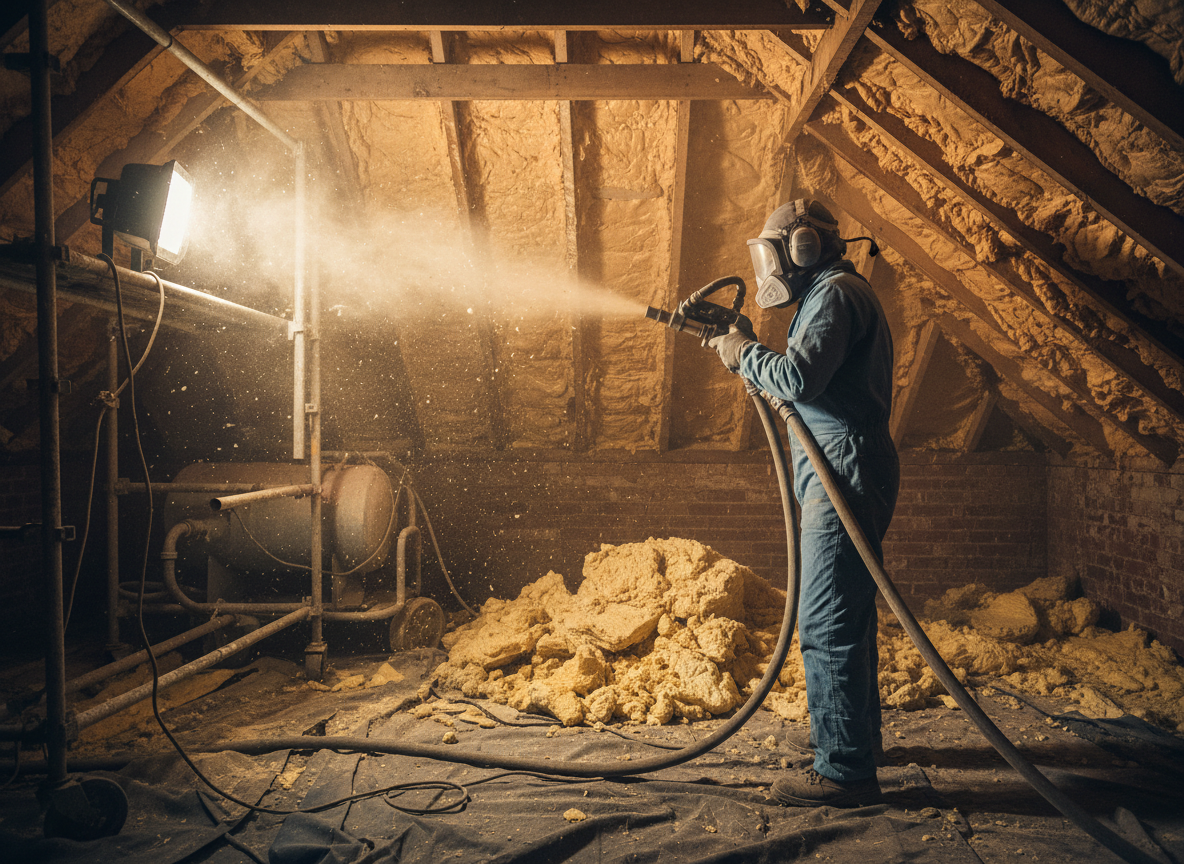
Sand blasting removes rigid spray foam from loft voids, wall cavities and underfloor spaces common in Sheffield's Victorian terraces and 1950s council stock. The method uses controlled abrasive media to strip cured polyurethane without damaging underlying brick, timber or plaster. Operators must first isolate electrical cables and pipework, then erect full containment sheeting because dust travels easily through the open stairwells typical of back-to-back houses in Walkley and Crookes.
Local weather adds complexity. Frequent rain and high humidity in the South Yorkshire Pennine fringe mean foam often bonds tightly to damp masonry, requiring slower pass speeds and lower blast pressures to avoid spalling soft red brick. In properties built before cavity wall construction became standard, crews frequently encounter foam that has migrated behind original lath and plaster, creating hidden pockets that only become visible once the main layer is cleared.
Disposal follows Environment Agency rules for construction waste. Removed foam is double-bagged on site and taken to licensed facilities rather than general landfill. Homeowners in areas such as Hillsborough or Ecclesfield should expect temporary ventilation restrictions while work proceeds, especially during winter when external doors and windows must stay sealed to contain dust.
Technician insight
In Sheffield, the thing that catches most people out with sand blasting spray foam insulation removal is how the damp stone in older terraces around the city centre holds moisture, making the foam grip far tighter than it does in drier inland properties.
Foam Removal in a Walkley Terrace
Homeowners noticed musty smells in the loft of their 1890s stone terrace. Inspection found spray foam had bridged behind the original rafters and trapped condensation against the chimney stack. Sand blasting at low pressure cleared the foam without damaging the soft stonework, followed by targeted ventilation improvements.
How it works
- 1
Site Survey and Containment Setup
Technicians inspect foam depth, substrate condition and access routes, then seal rooms with heavy-duty polythene and negative-air units.
- 2
Protection of Services
Electrical cables, pipework and vents are masked or isolated to prevent damage during blasting.
- 3
Controlled Sand Blasting
Abrasive media is applied at calibrated pressure to strip foam while preserving brick and timber surfaces.
- 4
Debris Removal and Final Clean
All loose material is vacuumed, surfaces are wiped, and the area is left ready for follow-on trades.
Pricing
Price depends on foam thickness, access difficulty and property age; quotes are provided after survey.