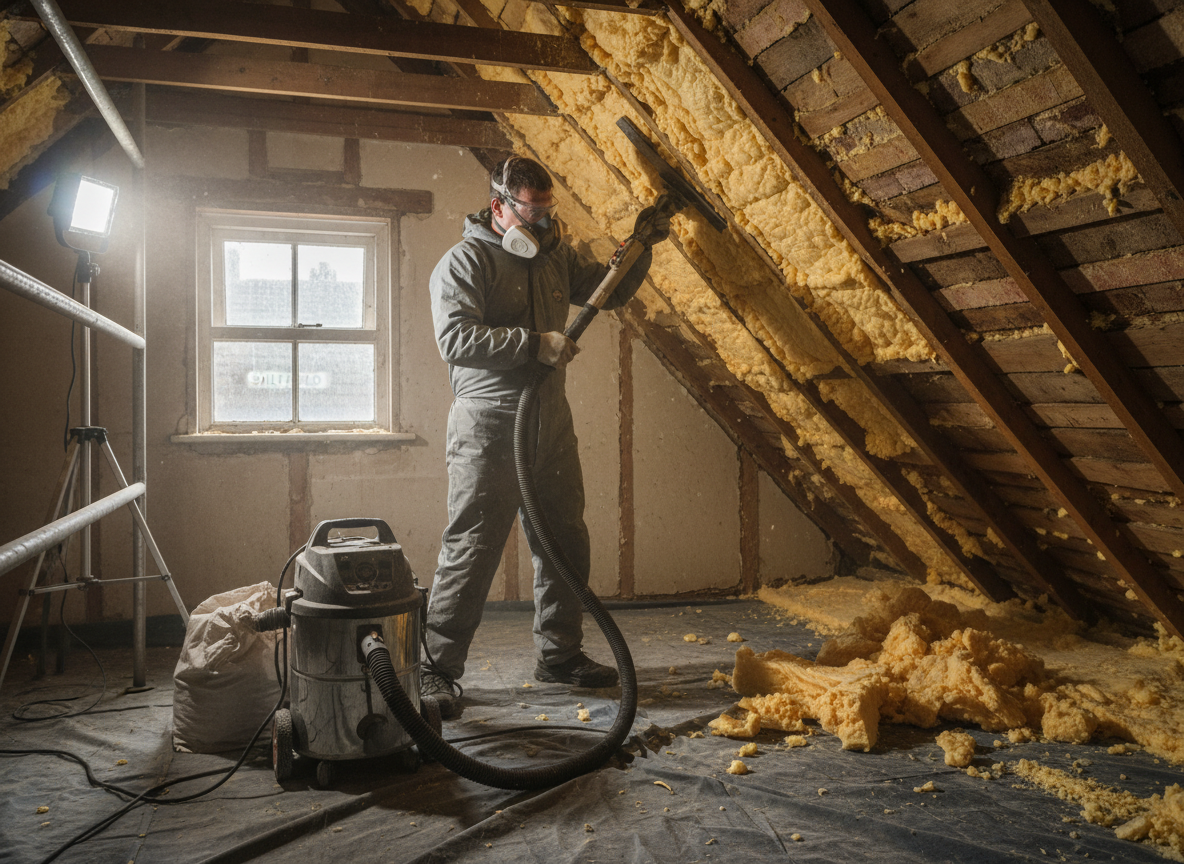
Sheffield's older terraced and semi-detached homes, particularly those built before the 1970s in districts like Walkley, Nether Edge and Hillsborough, often received spray foam insulation in lofts or under floors during later retrofit waves. Over time the material can trap moisture against timber joists and stone or brick walls, accelerating rot in a region that sees frequent rainfall and limited drying periods. Removal requires careful separation of the foam from original substrates without damaging lathe and plaster ceilings or exposing asbestos-containing materials common in pre-1980 Sheffield properties.
The process begins with containment to prevent loose particles migrating through the property. Technicians cut and peel the foam in sections, working around electrical cables, pipework and ventilation ducts that run through many South Yorkshire lofts. Once the bulk is cleared, residual adhesive and discoloured timber are assessed; affected joists may need localised treatment before new insulation or ventilation is installed. Homeowners in areas with steep roof pitches, such as those near the Peak District fringe, frequently discover hidden water ingress points once the foam is gone.
Local building regulations in Sheffield require that any exposed timber be checked for structural integrity before re-covering. PureGuard Services works with the existing ventilation paths typical of Yorkshire stone terraces, ensuring that roof spaces regain airflow rather than being resealed with impermeable layers. This approach prevents repeat condensation issues that originally prompted the foam installation in many post-war council and private homes across the city.
Technician insight
In Sheffield, the thing that catches most people out with spray foam insulation removal is how often the foam was sprayed straight over original lath and plaster in Victorian terraces around Walkley and Crookes. Once you start peeling it back you find the plaster has already started to fail from trapped damp, and the job suddenly becomes bigger than the homeowner expected.
Loft Foam Removal in a Hillsborough Terrace
Homeowner noticed musty smells and ceiling staining after heavy winter rain. Inspection found spray foam covering damp joists in the loft of a 1930s terrace. We removed the foam in sections, treated the affected timber and restored airflow through the original eaves vents. The property dried out and no further staining appeared.
How it works
- 1
Site Assessment
Inspect the property in Sheffield to identify foam locations, substrate condition and any hidden services.
- 2
Containment Setup
Seal work areas to contain dust and debris before cutting begins.
- 3
Foam Removal
Cut and lift sections of spray foam, clearing residues from joists and masonry.
- 4
Substrate Check and Handover
Verify timber condition, improve ventilation where needed and leave the space ready for follow-on work.
Pricing
Cost depends on access, depth of foam and condition of the underlying structure; quotes are provided after inspection.