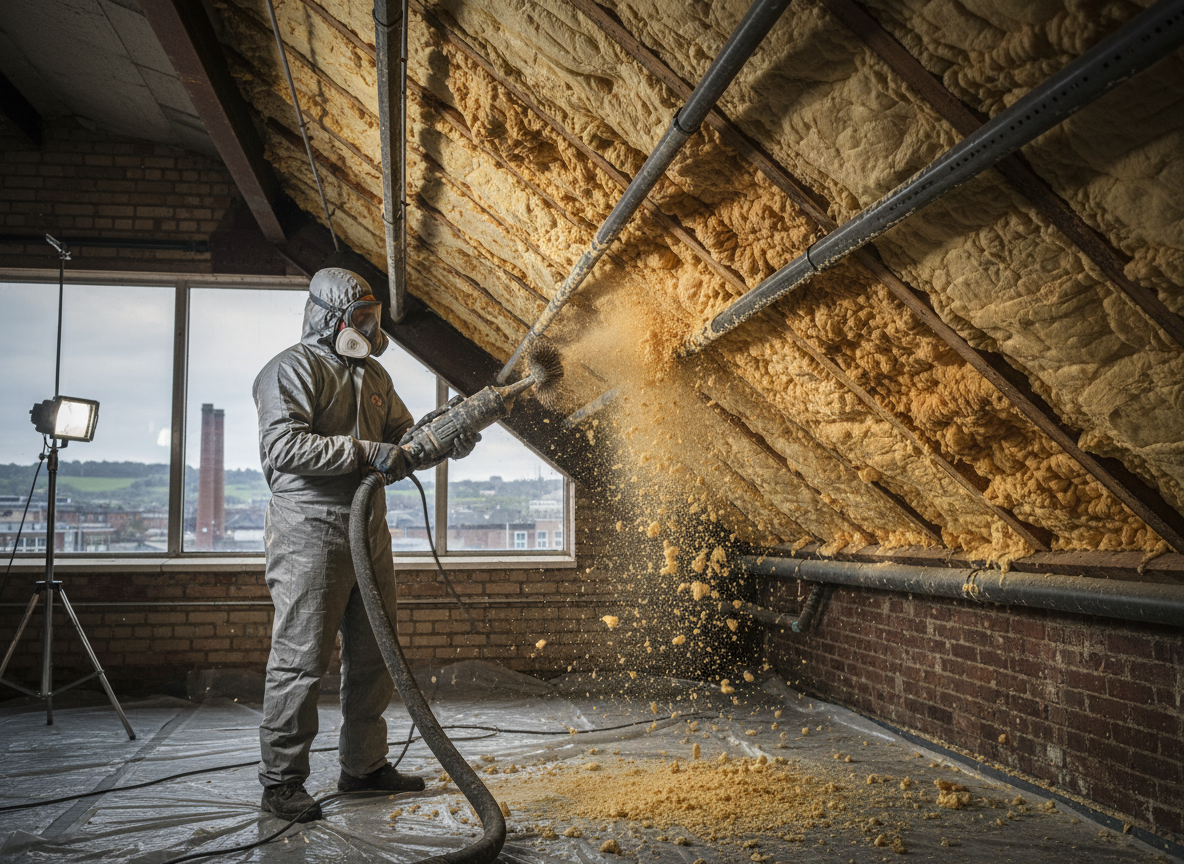
Thermal spray foam removal in Sheffield often involves older terraced and semi-detached homes where closed-cell foam was applied directly to roof decks and gable ends. These installations from previous decades trap condensation against timber joists and stonework, especially during the region's frequent wet winters when loft temperatures swing sharply. Removal requires cutting back the foam in controlled sections while protecting electrical cables and pipework that run through the same voids, then disposing of the material as construction waste rather than leaving residue that can off-gas later.
Edge cases appear regularly in Sheffield's Victorian and Edwardian stock around areas like Walkley and Nether Edge, where foam bridges into cavity walls and prevents the masonry from breathing. Attempting DIY scraping here risks damaging original lath and plaster ceilings below. Professional crews use low-heat tools to soften the foam without scorching timber, followed by thorough vacuum extraction and surface cleaning to remove the thin film that remains bonded to brick or rafters. Local building control sometimes requires notification when the work affects fire separation in shared terraces.
Disposal routes matter because cured foam cannot be recycled through standard household collections in South Yorkshire. We separate it into sealed bags for licensed landfill transfer and document the chain for the homeowner. After extraction we always check for hidden damp staining on rafters and recommend temporary ventilation measures until new insulation is installed, preventing the rapid mould regrowth that occurs once the foam's vapour barrier is gone.
Technician insight
In Sheffield, the thing that catches most people out with thermal spray foam removal is how the foam was often sprayed straight onto the underside of slate roofs in 1960s and 70s terraces around Hillsborough and Crookes, so when we peel it back the original felt is already perished and water finds new paths straight onto the joists.
Ecclesall Road Terrace Loft
Owner reported persistent loft condensation and ceiling staining in a 1920s Sheffield terrace. Inspection showed closed-cell foam had sealed roof vents and trapped moisture against rafters. We removed the foam in sections, cleared residues, and opened ventilation paths; the staining dried out within weeks once airflow returned.
How it works
- 1
Site Assessment
Inspect loft and wall cavities to map foam depth, identify services, and check for existing damp or rot in Sheffield properties.
- 2
Containment Setup
Seal work areas with sheeting and negative air to prevent dust migration into living spaces during cutting.
- 3
Foam Extraction
Use thermal knives and mechanical removal to cut and lift foam in sections without damaging underlying timber or masonry.
- 4
Cleanup and Disposal
Vacuum residues, bag waste for licensed disposal, and verify surfaces are clear before leaving site.
Pricing
Cost depends on foam thickness, access difficulty, and property size; we provide upfront quotes after inspection.