2026-10-22 ·
Local Building Regulations for Insulation Changes in Sheffield
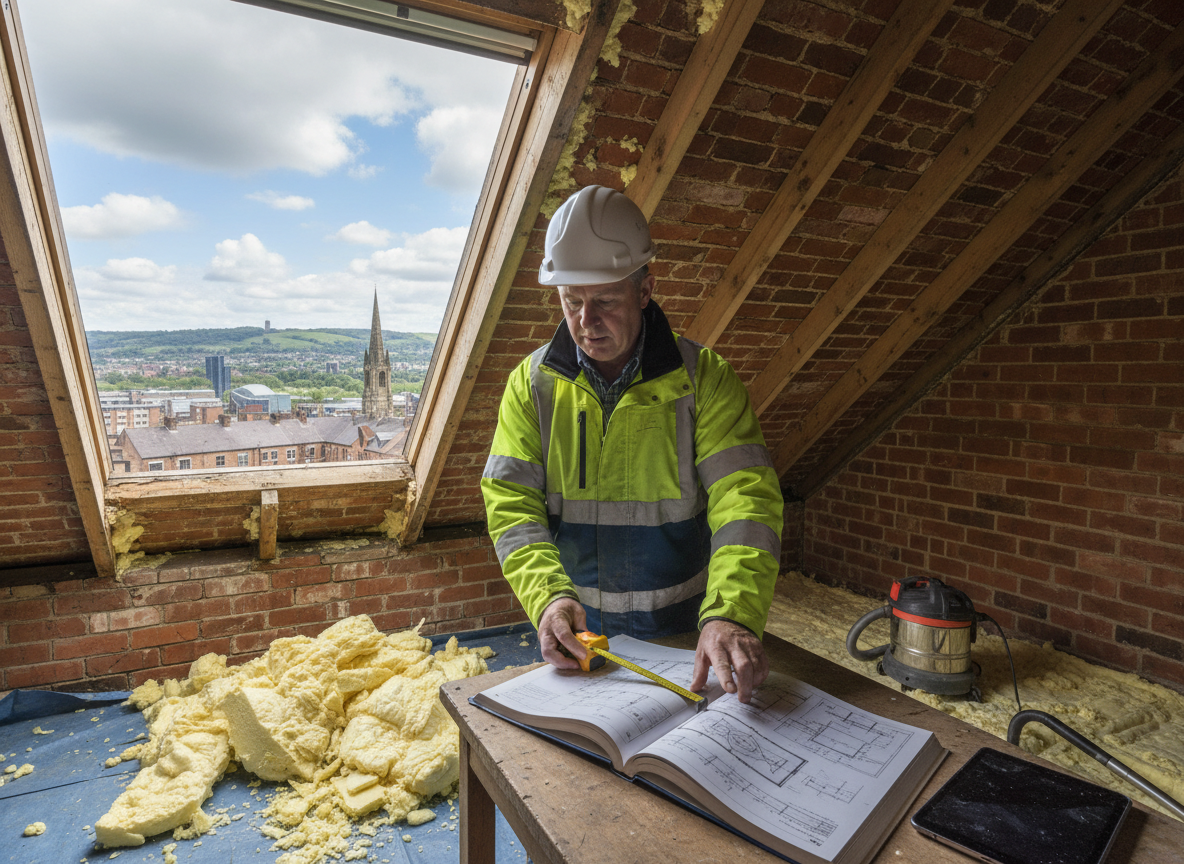
Changing insulation in Sheffield requires compliance with Building Regulations Approved Document L to maintain thermal performance and moisture control in the region's older housing stock. Properties across Sheffield and surrounds often feature Victorian and Edwardian terraces where spray foam was added to lofts or cavities, and any reversal or upgrade must address ventilation gaps that older buildings rely on to prevent damp. Sheffield City Council building control reviews notifications for works that affect structural integrity or energy ratings, particularly when lenders flag spray foam during mortgage valuations in neighborhoods like Hillsborough or Ecclesall.
Sheffield Building Regulations Overview
Sheffield follows national standards through local enforcement by the city council, requiring that insulation alterations do not compromise the original ventilation paths in pre-1919 homes common throughout South Yorkshire. These terraces frequently have solid walls and pitched roofs where closed-cell foam blocks airflow, triggering the need for assessment before removal. Homeowners in areas such as Rotherham or Barnsley face the same rules when extending work across boundaries. Notification to building control is mandatory if changes alter the building's thermal envelope or introduce new materials that affect fire resistance. PureGuard Services operates 24/7 from 35A Business Park, 18 Churchill Way Sheffield, S35 2PY to support urgent assessments that align with these requirements.
Part L Compliance for Insulation Changes
Approved Document L sets minimum standards for heat loss that apply whenever insulation is removed or replaced in Sheffield properties. For roof spaces in terraced houses, any new insulation must achieve equivalent performance to the original specification while restoring adequate ventilation to timber elements. In practice this means assessing existing spray foam layers that trap moisture against rafters during the damp winters typical of the Sheffield area. Building control officers check that works restore airflow at eaves and ridge levels, especially in homes near the Peak District foothills where temperature swings accelerate condensation risks. Failure to notify can delay sales when mortgage lenders require proof of compliance before approving loans on affected properties in Doncaster or Chesterfield.
When Removal Becomes Necessary
Removal is often required when spray foam prevents proper loft ventilation or when surveyors identify it during valuations in Sheffield's Victorian terraces. Local building control expects that any reversal restores the roof void to a state where air can circulate freely, avoiding the timber decay seen in properties around the city centre and surrounding valleys. Homeowners should arrange an insulation assessment before starting work, as changes that affect more than 25 percent of the thermal envelope usually need formal notification. In South Yorkshire the combination of high rainfall and older slate roofs makes prompt action important to prevent secondary damage once foam is taken out. Spray foam insulation removal teams familiar with these regulations coordinate with council inspectors to ensure the finished space meets current standards.
Local Housing Stock and Practical Steps
Sheffield's dominant terraced and semi-detached stock from the late 1800s demands careful sequencing during insulation changes to avoid disturbing shared chimney stacks or party walls. Residents in Worksop or Huddersfield encounter similar conditions when coordinating across county lines. Practical steps include documenting existing ventilation before any removal, confirming that new insulation will not block existing air bricks, and obtaining written confirmation from building control once works finish. Linking removal projects to an upcoming cost guide for spray foam removal in Sheffield terraced houses helps owners plan around seasonal access issues on narrow streets. Checking the winter removal timing guide also aligns jobs with drier months when loft access is safer. These steps keep alterations lawful and protect the long-term fabric of local homes.